An honest, fee-by-fee comparison of the top centralized swap tools — and how AquaSwap bridges the gap when you’re ready to discover on-chain projects.
Why CEX Swaps Still Dominate Retail Trading
In July 2026, decentralized exchanges handled a record ~24% of all crypto spot volume (The Block / DefiLlama data). Absolute volumes on both DEXs and CEXs declined that month, but decentralized platforms held up better — meaning the ratio rose largely because CEX activity contracted more sharply. The other ~76% of spot volume still happens on centralized exchanges.
Most retail users don’t start with MetaMask and a DEX aggregator. They start with a simple question: “How do I swap my Bitcoin for Ethereum?” — and they want it done in ten seconds, often with a debit card or bank transfer.
The problem is that “swap” doesn’t mean the same thing across platforms. Some advertise zero fees but hide costs in spreads. Others show a clean price, then stack commissions. Pick the wrong tool for your trade size and you can overpay by 5× without realizing it.
This guide ranks the 5 best centralized swap platforms by what actually matters in 2026: real all-in cost, liquidity depth, regulatory safety, and transparency. Data reflects published fee schedules and market conditions as of August 2026 — always check live rates before trading.
1. Binance Convert — Best for Low Fees & Deep Liquidity
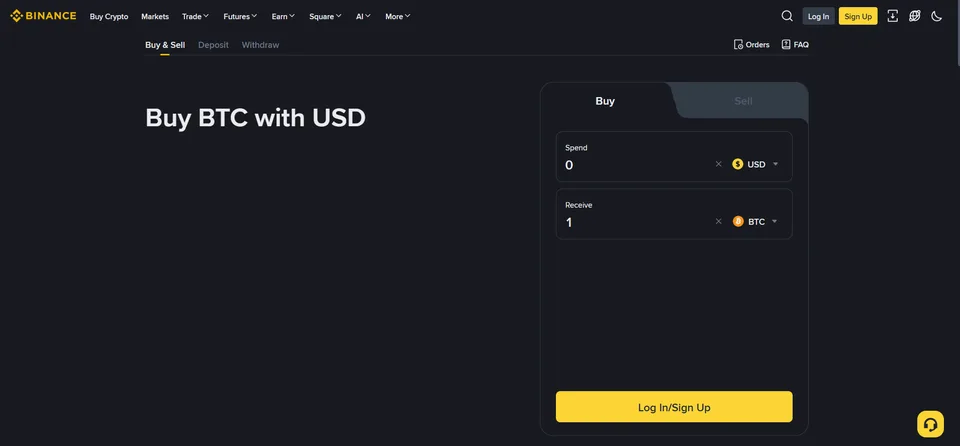
Binance remains the largest crypto exchange by volume. Its Convert tool is the fastest way to swap inside that ecosystem. It supports 350+ cryptocurrencies with a very low minimum order size and settles instantly.
What it actually costs (approx. on a $1,000 trade):
Method | Visible Fee | Hidden Cost | Real Cost on $1,000 |
|---|---|---|---|
Convert | $0 | Spread ~0.05%–0.5% | ~$0.50–$5.00 |
Spot (market) | 0.10% taker | Negligible on majors | ~$1.00 |
Spot (limit + BNB) | 0.075% maker | $0 | ~$0.75 |
Binance Convert advertises “zero trading fees,” which is technically true — there is no separate commission. The real cost is the spread. On liquid pairs like BTC/USDT in calm markets it can be as tight as 0.05%. On volatile altcoins it widens toward 0.5% or more.
Best for: Users who want the tightest spreads on major pairs and don’t mind a spread-based model. Chains/assets: 350+ cryptos, fiat on-ramp available. The catch: KYC required; geo-restrictions apply (Binance.US is a separate entity); funds are custodial. Who should skip it: Restricted jurisdictions or anyone who wants self-custody immediately after the swap.
2. Coinbase — Best for Beginners & US Regulatory Safety
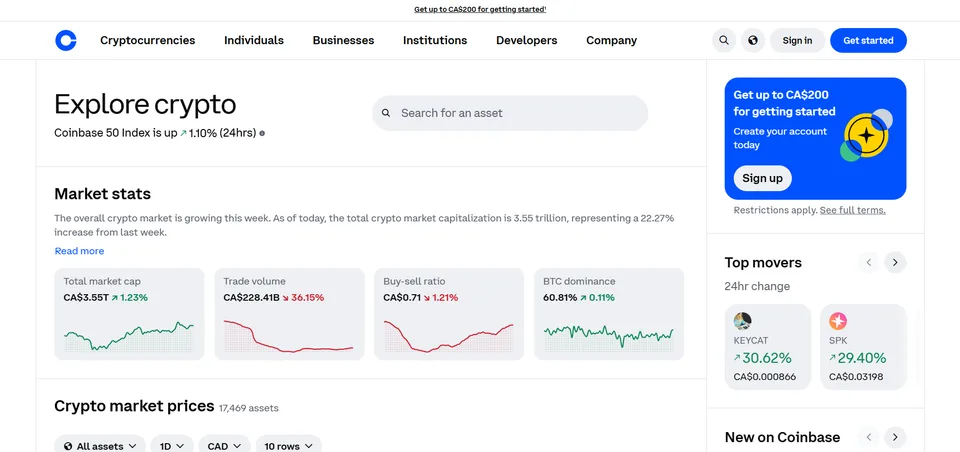
Coinbase is the default on-ramp for most US retail users. Its simple Buy/Sell/Convert interface removes barriers for first-timers, and the company is publicly listed with a strong compliance track record.
What it actually costs:
Order Size / Method | Simple Trade Fee | Plus Spread |
|---|---|---|
Under $10 | $0.99 | Included in quote |
$10–$25 | $1.49 | Included |
$25–$50 | $1.99 | Included |
$50–$200 | $2.99 | Included |
Over $200 (bank/ACH) | ~1.49% | Included |
Over $200 (debit/credit) | ~3.99% | Included |
The simple trade fee is only half the story — Coinbase also embeds a spread in the quoted price. For a $1,000 BTC purchase via bank transfer you are often looking at ~1.49% + spread (frequently north of 2% total).
The better option: Coinbase Advanced Trade drops fees to roughly 0.40% maker / 0.60% taker (base tier) with no embedded spread. For anything over ~$200, switch to Advanced — it takes five minutes and saves real money.
Best for: US beginners who want a regulated, insured on-ramp. Standout: ~98% cold storage, free ACH withdrawals on Base, strong tax reporting. The catch: Simple trades are expensive; spread is opaque. Who should skip it: Active traders (use Advanced or another platform).
3. Kraken — Best for Security & Transparency
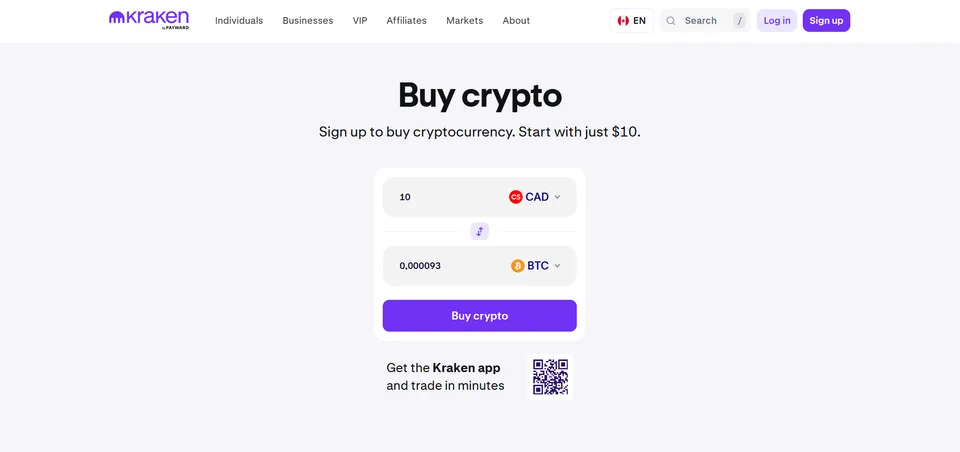
Kraken has operated for 14+ years without a customer-fund hack. It offers user-verifiable proof of reserves via Merkle-tree verification and holds a Wyoming Special Purpose Depository Institution (SPDI) bank charter — rare in the industry.
What it actually costs (approx. on $1,000):
Method | Fee Structure | Real Cost on $1,000 |
|---|---|---|
Instant Buy/Sell | Spread (varies) + ~1% | ~$5–$15 |
Convert Small Balances | 3% fixed (under minimum) | $0.30 on $10 |
Kraken Pro (spot) | 0.00%–0.40% maker / 0.04%–0.60% taker | $0–$6.00 |
Kraken+ members get fee waivers on up to $10,000/month in trading volume — a genuine perk for regular users.
Best for: Users who prioritize security, transparency, and regulatory compliance. Standout: Live chat support, proof of reserves, Wyoming bank charter, no payment for order flow. The catch: Instant spreads are less transparent than Pro fees; UI is less beginner-friendly than Coinbase. Who should skip it: Pure lowest-cost seekers who don’t value reserve verification.
4. OKX — Best Hybrid (CEX Convert + DeFi Wallet)
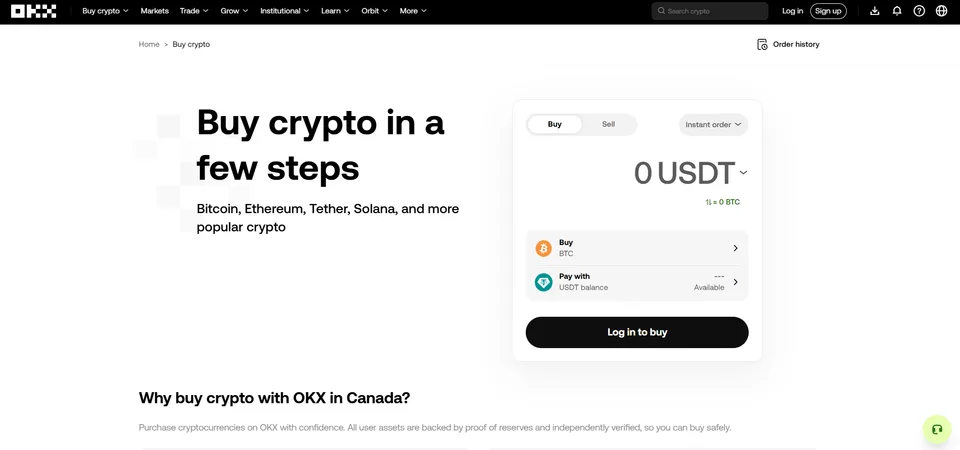
OKX is the only major exchange that gives you a competitive CEX and a self-custody DEX aggregator in one ecosystem. Its Convert tool is simple, but the real value is the OKX Wallet with X Routing across multi-chain DEX liquidity.
What it actually costs (approx. on $1,000):
Method | Visible Fee | Hidden Cost | Real Cost on $1,000 |
|---|---|---|---|
OKX Convert | $0 | Spread up to 1.00% | ~$5–$10 |
OKX Spot (limit) | 0.08% maker | $0 | ~$0.80 |
OKX Spot (market) | 0.10% taker | Negligible | ~$1.00 |
OKX discloses that Convert spreads can reach up to 1.00%. In practice a $1,000 conversion often costs 5–10× more than a limit order on the spot market.
Best for: Users who want CEX convenience today and a clear path to self-custody tomorrow. Standout: OKX Wallet with cross-chain DEX aggregation, low spot fees, futures. The catch: Convert is expensive for the convenience; KYC required for CEX features. Who should skip it: Users who only want a simple swap and will never use the wallet or futures.
5. Uphold — Best for Anything-to-Anything Swaps
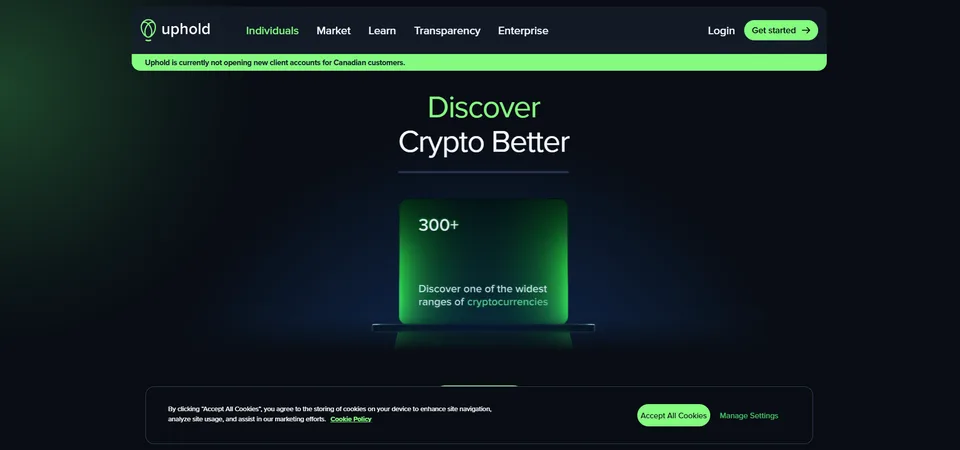
Uphold is the only platform on this list where you can swap Bitcoin for gold, Ethereum for silver, or USD for EUR in the same flow. It uses pure spread-based pricing — no maker/taker, no order book.
Typical spreads (August 2026 published ranges):
Asset Type | Typical Spread |
|---|---|
Most stablecoins | Under 0.25% |
Major fiat pairs | ~0.30% |
Bitcoin & Ethereum | 1.4%–2.20% |
Altcoins | 2.5%–3.80% |
Precious metals | 1.9%–3.40% |
Uphold publishes real-time assets and liabilities, claims 100%+ reserve backing, and holds licenses across FinCEN, FCA, and FINTRAC.
Best for: Users who want crypto, fiat, and metals in one account with dead-simple UX. Standout: Real-time reserve transparency, cross-asset swaps, DCA automation. The catch: Expensive for pure crypto traders. Who should skip it: Anyone not swapping into metals or foreign currency.
Quick Comparison: What $1,000 Actually Costs
Platform | Swap Method | Real Cost* | KYC | Fiat Ramp | Self-Custody | Mobile App |
|---|---|---|---|---|---|---|
Binance | Convert | ~$0.50–$5.00 | Yes | Yes | ❌Custodial | Yes (iOS/Android) |
Binance | Spot + BNB | ~$0.75 | Yes | Yes | ❌Custodial | Yes (iOS/Android) |
Coinbase | Simple (bank) | ~$15–$20 | Yes | Yes | ❌Custodial | Yes |
Coinbase | Advanced | ~$0–$6.00 | Yes | Yes | ❌Custodial | Yes |
Kraken | Instant | ~$5–$15 | Yes | Yes | ❌Custodial | Yes |
Kraken | Pro | ~$0–$6.00 | Yes | Yes | ❌Custodial | Yes |
OKX | Convert | ~$5–$10 | Yes | Yes | ❌Custodial | Yes |
OKX | Spot (limit) | ~$0.80 | Yes | Yes | ❌Custodial | Yes |
Uphold | Any-to-any | ~$14–$38 | Yes | Yes | ❌Custodial | Yes |
*Estimated real cost including spreads and fees on a $1,000 BTC or ETH swap. Actual costs vary by pair, volatility, and payment method. Always verify live quotes.
How to Choose the Right Swap Tool
Want the cheapest possible swap on major pairs? → Binance Convert (small trades) or Binance Spot + BNB (larger trades)
US-based beginner who values regulation over cost? → Coinbase Advanced (never Simple mode above $200)
Security-first user who wants proof of reserves? → Kraken Pro
Want a CEX today but plan to move to self-custody later? → OKX (use the wallet, not Convert)
Swapping between crypto, fiat, and metals? → Uphold
Tired of copy-pasting contract addresses into three different tabs? → Keep reading.
The Bridge: When You’re Ready to Swap Beyond Blue-Chips
Every platform above is excellent at swapping assets you already know: BTC → ETH, USDC → USDT, fiat → crypto.
The limitation is clear: CEX convert tools only list what they’ve approved. You won’t find a token that launched yesterday on Base or Solana. You won’t see live TradingView charts for a project with a $2M market cap. And you can’t bridge from Ethereum to Avalanche, swap into a new token, then cash out to fiat — all in one flow.
That’s where AquaSwap comes in.
AquaSwap is the swap layer inside the Aquads ecosystem — a full-stack project hub for on-chain projects. It is not a CEX and is not trying to replace Binance or Coinbase. It is built for the moment you discover a project on Aquads and want to go from “interesting” to “holding” without opening five tabs.
What it actually does:
Feature | What It Means for You |
|---|---|
Rate Aggregation | Routes across multiple DEXs and liquidity sources for the best price (powered by LiFi) |
Cross-Chain Bridge | Swap and bridge in one flow — no separate bridge UI |
Fiat Onramp & Offramp | Buy crypto with fiat or cash out directly |
200+ Wallet Connections | MetaMask, Phantom, Trust, Rabby and more via Reown |
Chrome Extension | Swap from any webpage |
Live TradingView Charts | Charts embedded next to every project bubble |
Gamified Rewards | 5 points per qualifying swap (min. $5 USD) |
Fee | 0.5% per swap |
Chains | 50+ blockchains |
KYC | None required for swapping |
The honest boundary: For $50K+ block trades on Ethereum mainnet, 1inch or UniswapX will usually deliver better net pricing. AquaSwap shines at the discovery-to-execution layer — the moment you find a project on Aquads and want to act instantly.
At 0.35%, the fee is higher than pure CEX convert spreads on majors, but you receive LiFi-powered routing, native bridging, fiat ramps, charts, 200+ wallets, a Chrome extension, and rewards — all inside the same interface where projects are discovered.
The Bottom Line
The “best” swap tool depends on where your capital lives, how much you’re moving, and what you’re swapping into.
Binance Convert wins on raw cost for major pairs.
Coinbase wins on regulatory safety (use Advanced).
Kraken wins on trust and transparency.
OKX wins as the bridge between CEX and self-custody.
Uphold wins when your portfolio includes gold and foreign currency.
AquaSwap wins when you stop swapping assets you already know and start discovering assets you don’t. It is the swap layer inside a project hub built for on-chain discovery — with the fiat-onramp convenience of a CEX plus the token access and wallet freedom of DeFi.
If you want to know the best DeFi swaps to use then read this blog Here
Ready to swap? Explore AquaSwap on Aquads · Install the Chrome extension · List your project free