Building a crypto community in 2026 is no longer just about getting followers on X or members into Discord.
The harder problem is building a system that can attract users, activate them, verify meaningful participation, retain them, and measure what they actually do.
That is why the best Web3 growth platforms are not interchangeable.
Some specialize in large-scale campaign distribution. Others focus on gamification, token-gated access, on-chain activity, analytics, or post-launch operations.
This guide compares seven platforms that are currently active and publicly verifiable as of August 8, 2026, with a focus on what each platform actually does, who it is best suited for, pricing where publicly available, limitations, and where it fits into a modern crypto growth stack.
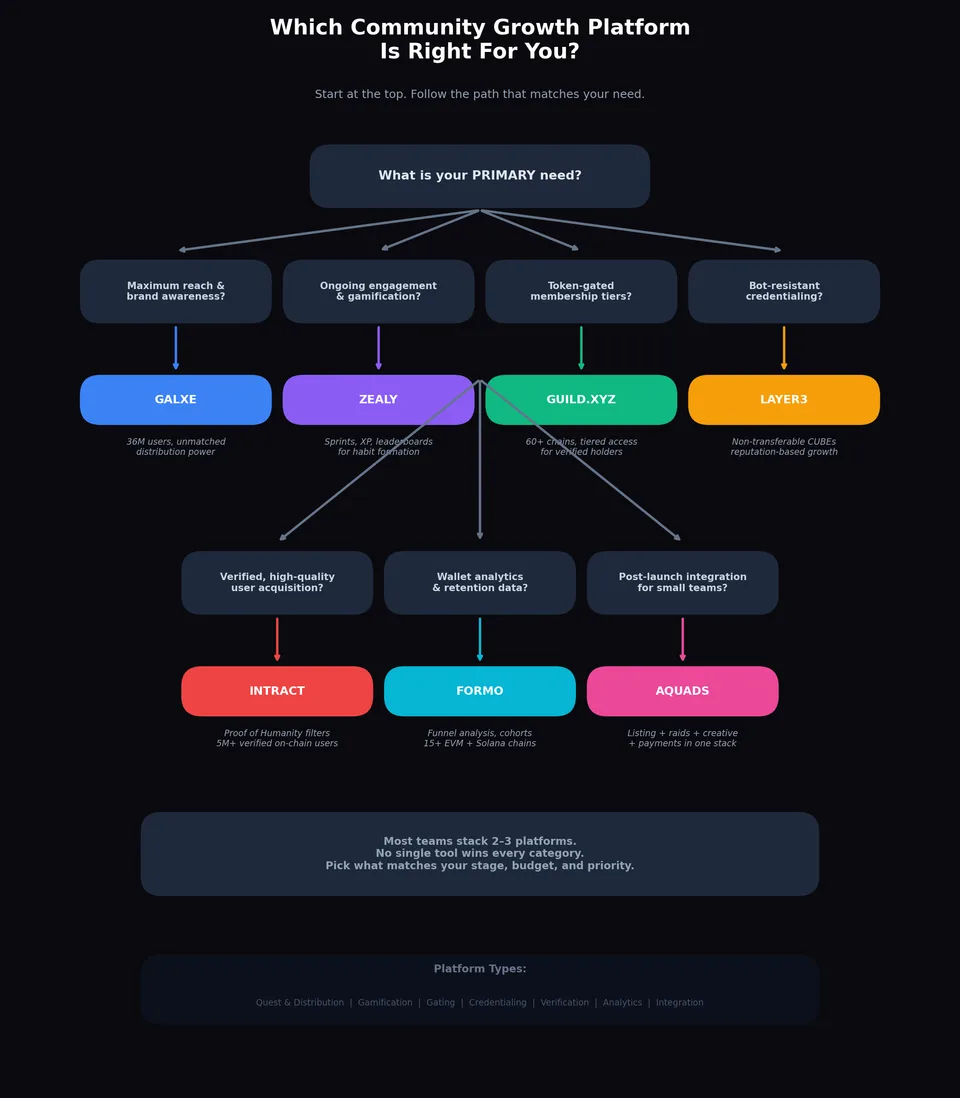
Quick Answer: Which Crypto Community Growth Platform Should You Choose?
There is no universal winner.
A project running a massive ecosystem campaign may need Galxe. A project trying to keep an existing Discord community active may prefer Zealy. A DAO may need Guild.xyz. A DeFi protocol focused on user behavior may need Layer3 and Formo.
A newly launched token that needs visibility, promotion, contributors, creative work and other post-launch services may have a different problem altogether.
That is where Aquads fits.
What Makes a Good Crypto Community Growth Platform in 2026?
The Web3 growth industry has matured.
A campaign generating 100,000 quest completions does not necessarily mean that 100,000 valuable users joined a project.
Likewise, a Discord with 50,000 members does not necessarily represent 50,000 active users.
Modern crypto growth teams increasingly need to understand:
Who actually participated?
Which wallets performed meaningful actions?
Which campaigns generated product usage?
Which users returned?
Which users became holders or contributors?
Where did the best users come from?
How much did those users cost to acquire?
What happened after the campaign ended?
That creates several different categories of growth infrastructure.
Acquisition
Getting new users into the ecosystem.
Activation
Getting those users to perform a meaningful first action.
Engagement
Giving users reasons to participate repeatedly.
Verification
Separating meaningful participants from low-quality or automated activity.
Retention
Understanding whether users return.
Operations
Giving a project the people, services and infrastructure needed to continue growing after launch.
Not every platform below handles every stage.
That is intentional.
How We Evaluated the Platforms
For this comparison, we reviewed current official websites, product documentation, pricing information, platform announcements and publicly available third-party information.
We also checked whether the relevant product was still operating as of August 8, 2026.
This matters because Web3 infrastructure changes quickly. Products get renamed, companies pivot, platforms shut down, and pricing changes.
For that reason:
Current claims are based on current documentation where possible.
Older statistics are clearly labeled with their original date.
Company-reported figures are identified as reported rather than independently audited.
Traffic estimates are treated as estimates.
Platforms that were no longer operating or whose relevant products had been sunset were excluded.
1. Galxe — Best for Large-Scale Campaign Distribution
Direct answer
Galxe is one of the most established Web3 growth platforms for running large-scale quests, campaigns, onboarding experiences and loyalty programs.
It is particularly attractive to projects that need reach and campaign infrastructure rather than simply a private community-management tool.
Galxe's official 2025 Year in Review reported 36 million users and 7,700+ projects, while its current product ecosystem includes Quest, Passport, Score, Starboard, Earndrop and other growth products.
What is Galxe?
Galxe started with a strong focus on Web3 quests and credentials but has expanded into a broader growth platform.
Projects can create campaigns that ask users to complete social, community and on-chain activities.
Depending on the campaign, users may:
Follow or interact with an X account
Join Discord
Complete an on-chain transaction
Hold a token or NFT
Interact with a dApp
Complete educational activities
Participate in ecosystem campaigns
Earn rewards or credentials
Galxe has also expanded into identity and verification products through Galxe Passport and related infrastructure. Its current website lists Quest, Starboard, Earndrop, Passport, Score, Smart Balance and Galxe Identity Protocol among its products.
Reported scale
Galxe's 2025 Year in Review reports:
36 million users
7,700+ projects
1 million daily active users
These are company-reported figures, not independently audited user statistics.
That distinction matters when comparing platforms.
Key features
Quest campaigns
On-chain task verification
Social task verification
Credentials
Passport
Loyalty campaigns
Starboard
Earndrop
Analytics
Multi-chain campaigns
Ecosystem onboarding
Best for
Galxe is particularly well suited to:
Layer 1 ecosystems
Layer 2 networks
DeFi protocols
Large token launches
NFT ecosystems
Testnet campaigns
Ecosystem onboarding
Large-scale community campaigns
Strengths
1. Large existing audience
Galxe's reported scale gives projects access to a large pool of Web3 users.
2. Mature campaign infrastructure
The platform has years of experience running Web3 campaigns at scale.
3. Broad product ecosystem
Galxe has expanded beyond basic quests into identity, loyalty, analytics and distribution products.
4. Strong fit for ecosystem campaigns
Large blockchain ecosystems can use Galxe to coordinate onboarding and participation across many campaigns.
Limitations
Smaller projects can struggle to stand out.
Campaigns still require good incentive design.
Large participation numbers do not automatically equal valuable users.
More advanced functionality can require a more sophisticated setup.
What to watch out for
Quest farming.
If the campaign rewards users for completing low-value actions, you can generate enormous participation without creating meaningful adoption.
The better approach is to make campaign actions correspond to actual product or ecosystem value.
Pricing
Galxe offers free and paid products, with Business+ plans for teams requiring additional functionality.
Because pricing can vary by product and billing period, projects should check Galxe's current commercial terms before budgeting.
Bottom line
Choose Galxe when your primary objective is reaching and activating a large Web3 audience.
2. Zealy — Best for Gamified Community Engagement
Direct answer
Zealy is a community engagement platform built around quests, rewards, XP, competitions and recurring participation.
It is particularly useful when a project wants to turn community activity into an ongoing engagement loop.
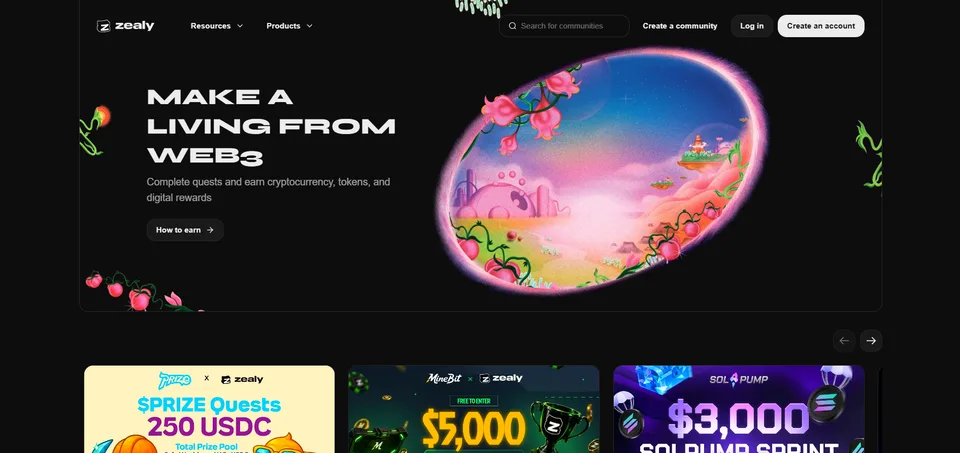
Zealy remains active in 2026, with its current platform allowing users to discover communities and complete quests for crypto and digital rewards. Its current blog and changelog also show ongoing product and campaign activity.
What is Zealy?
Zealy, formerly known as Crew3, lets projects create community spaces where members complete activities and earn rewards.
The model is less about one giant campaign and more about recurring participation.
A community can create:
Daily quests
Weekly quests
Community competitions
XP systems
Leaderboards
Reward campaigns
Educational activities
Product adoption campaigns
Current platform activity
Zealy's current website remains operational and actively promotes quests and crypto rewards. Its 2026 blog also contains recent case studies and campaign material, including campaigns published in 2025 and 2026.
Older Zealy user statistics should not be presented as current.
For example, older public material cited approximately 700,000 monthly active users and 100 million tasks completed, but those figures date from 2023.
They should therefore be treated as historical reference points, not 2026 user counts.
Key features
Quests
XP
Leaderboards
Rewards
Community competitions
Social tasks
On-chain tasks
Community analytics
Discord integrations
Recurring campaigns
Best for
Zealy is particularly useful for:
Existing communities
DAOs
Gaming projects
NFT communities
Discord-heavy projects
Projects running recurring campaigns
Strengths
1. Strong gamification
XP and competition mechanics can give members a reason to return.
2. Recurring engagement
Projects can continuously publish activities rather than relying on one campaign.
3. Community-friendly interface
The platform is designed around community managers and participants.
4. Active ecosystem
Current Zealy campaigns and 2026 content demonstrate that the platform remains operational.
Limitations
Gamification can encourage low-quality farming.
Projects need to continually create worthwhile quests.
It is not necessarily the best tool for maximum one-time distribution.
Historical user figures should not be treated as current.
What to watch out for
The biggest danger is turning your community into a chore board.
If every activity is:
Follow X → join Discord → retweet → repeat
users may participate for rewards without developing any real interest in the project.
Pricing
Zealy currently offers free and paid plans, with pricing depending on the selected plan and billing structure.
Because Zealy's pricing and overage rules can change, check its current billing documentation before purchasing.
Bottom line
Choose Zealy when your primary objective is recurring community engagement and gamification.
3. Guild.xyz — Best for Token-Gated Communities
Direct answer
Guild.xyz is a community-management platform focused on access control, token gating, roles, quests and membership requirements.
It is particularly useful when the question is:
Who should have access to this community, role or benefit?
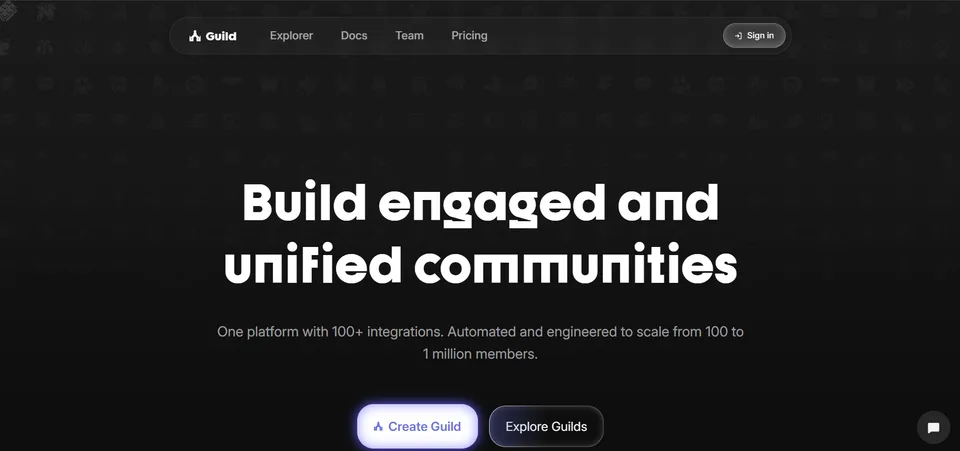
Guild remains active, with a current website, documentation, pricing section, blog activity in 2026 and an active authentication API.
What is Guild.xyz?
Guild lets communities define requirements for membership and access.
Requirements can involve:
Token ownership
NFT ownership
Wallet activity
Social accounts
Community roles
Other supported credentials
A project can then connect those requirements to community spaces and membership structures.
Key features
Token gating
NFT gating
Wallet requirements
Community roles
Discord integrations
Telegram integrations
Quests
Points
Leaderboards
Membership management
Access control
Best for
Guild is particularly suited to:
DAOs
Token communities
NFT projects
Contributor programs
Private communities
Holder communities
Membership systems
Strengths
1. Strong access control
Guild is designed around defining who qualifies for access.
2. Flexible requirements
Projects can combine different requirements instead of relying solely on token ownership.
3. Community management
The platform connects Web3 requirements with community roles and permissions.
4. Active development
Guild's current website and 2026 blog demonstrate ongoing platform activity.
Limitations
It is not primarily a mass-acquisition platform.
More sophisticated access structures can require setup work.
Token gating alone does not guarantee a valuable community.
What to watch out for
Simple token gating can be weak.
For example:
Hold one token → gain access
does not necessarily tell you whether the person is an active contributor.
More useful systems can combine:
Token holdings
NFT ownership
On-chain activity
Contributions
Reputation
Other eligibility conditions
Pricing
Guild offers multiple pricing tiers and enterprise options.
Because current pricing can change, verify the live pricing page before publishing exact figures or budgeting a campaign.
Bottom line
Choose Guild.xyz when access control and membership management are more important than mass acquisition.
4. Layer3 — Best for On-Chain Activations
Direct answer
Layer3 is a strong choice for projects that want users to perform actual on-chain activities rather than simply complete social tasks.
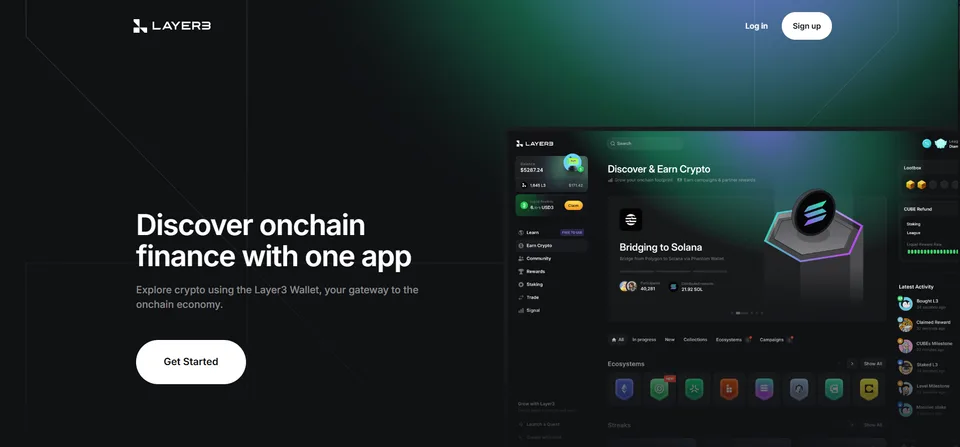
Layer3 is currently active and its product has expanded into a broader on-chain consumer platform, including its wallet and activity ecosystem.
What is Layer3?
Layer3 lets users discover and complete on-chain activities across supported ecosystems.
Examples can include:
Swapping
Bridging
Using DeFi applications
Interacting with protocols
Completing ecosystem activities
Earning credentials and rewards
Layer3's CUBE credentials provide a persistent record of participation.
Reported historical scale
Layer3 previously reported:
300,000 monthly active users on EVM chains
150 million transactions
Those figures were published in its expansion material and are useful as historical context, but they should not be presented as current 2026 totals unless Layer3 publishes an updated figure.
This is an important distinction because old Web3 growth numbers are frequently recycled as though they were current.
Current product
Layer3's current website promotes:
Layer3 Wallet
On-chain activities
Trading
Staking
Earning
Multi-chain experiences
It has also expanded to Solana, demonstrating that its current product is not limited to its original EVM-only positioning.
Key features
On-chain activities
CUBE credentials
Rewards
Wallet
Multi-chain experiences
DeFi discovery
Cross-chain functionality
Ecosystem onboarding
Best for
Layer3 is particularly relevant to:
DeFi protocols
Layer 2 ecosystems
Consumer crypto applications
Infrastructure projects
Projects where actual product usage matters
Strengths
1. Focus on meaningful activity
Projects can create campaigns around real product interactions.
2. Persistent credentials
CUBE credentials can represent participation beyond a single campaign.
3. Broader on-chain product
Layer3 has expanded from quests into a wider consumer crypto experience.
Limitations
More complex than a simple social campaign.
Not every community needs credential infrastructure.
Users may face more friction when campaigns require actual on-chain transactions.
What to watch out for
Do not create on-chain tasks merely to inflate transaction counts.
The best campaigns connect transactions to actions that genuinely matter to the protocol.
Pricing
Layer3's commercial options depend on the product and integration involved. Teams should check current builder and partnership terms directly.
Bottom line
Choose Layer3 when you want users to perform meaningful on-chain actions rather than simply complete social tasks.
5. TaskOn — Best for Multi-Chain Quest and Campaign Infrastructure
Direct answer
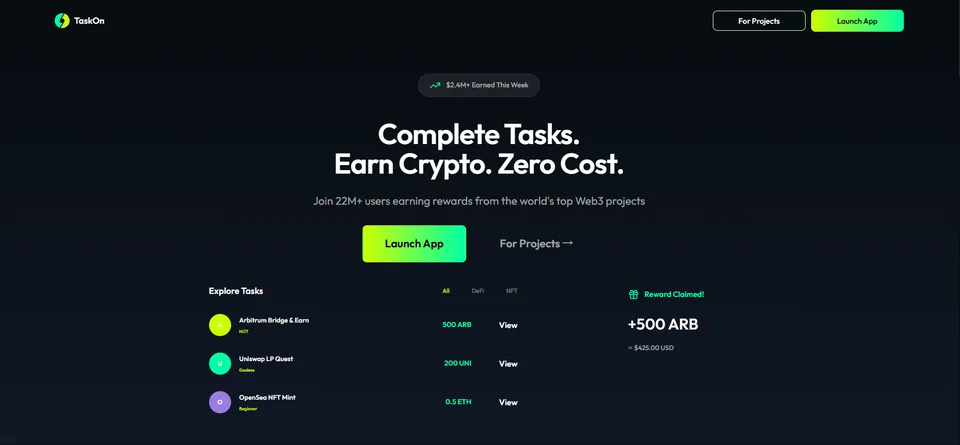
TaskOn is a Web3 community-growth platform focused on campaigns, quests, rewards, user acquisition, engagement and retention.
It is a useful alternative to older quest platforms that are no longer operating and can fit projects that want a broad campaign toolkit without relying exclusively on one ecosystem.
TaskOn remains active, with its official blog publishing product and case-study material and its documentation describing current campaign functionality.
What is TaskOn?
TaskOn lets projects create campaigns using both on-chain and off-chain tasks.
Its official documentation describes use cases including:
Acquiring new users
Retaining existing users
Increasing dApp usage
Growing communities
Driving trading volume
NFT mint campaigns
Whitelists
Giveaways
Reward campaigns
Historical reported scale
TaskOn's public documentation reports:
160,000+ registered users
150,000+ monthly active users
10,000+ daily active users
22 supported blockchains
However, this information appears in older documentation and should therefore be treated as historical reported data, not as an independently verified August 2026 user count.
That distinction is important.
Current capabilities
TaskOn supports campaign mechanics including:
On-chain tasks
Off-chain tasks
Token requirements
NFT requirements
Social requirements
Country/region eligibility
Reward distribution
Points
EXP
Campaign data
Project verification
TaskOn's documentation also describes its verification system for project accounts and eligibility rules for participants.
Key features
Quest campaigns
Giveaways
Airdrops
On-chain tasks
Off-chain tasks
Token/NFT eligibility
Rewards
EXP
Campaign analytics
Project verification
Multi-chain support
Best for
TaskOn is particularly suited to:
Token launches
DeFi projects
NFT projects
Community campaigns
Airdrop campaigns
Whitelist campaigns
Multi-chain ecosystems
Strengths
1. Broad campaign toolkit
TaskOn supports a range of campaign formats rather than focusing on only one engagement mechanic.
2. On-chain and off-chain tasks
Projects can combine social actions with blockchain interactions.
3. Eligibility controls
Projects can require token holdings, NFT ownership, TaskOn levels and other criteria.
4. Active 2025–2026 content
TaskOn's official blog contains recent case studies and growth material, including posts from December 2025.
Limitations
Some public platform statistics are dated.
Projects still need to design campaigns carefully to avoid low-quality participation.
TaskOn overlaps with several other quest platforms, so the right choice depends on audience, workflow and campaign requirements.
Pricing
TaskOn's public documentation states that the platform has historically offered its core functions free to users, while business-side offerings and promotional placements may vary.
Because current commercial terms can change, verify the live TaskOn terms before budgeting.
Bottom line
Choose TaskOn when you want flexible Web3 campaign infrastructure spanning quests, eligibility, rewards and on-chain/off-chain activities.
6. Formo — Best for Web3 Analytics and Retention
Direct answer
Formo is not primarily a quest platform.
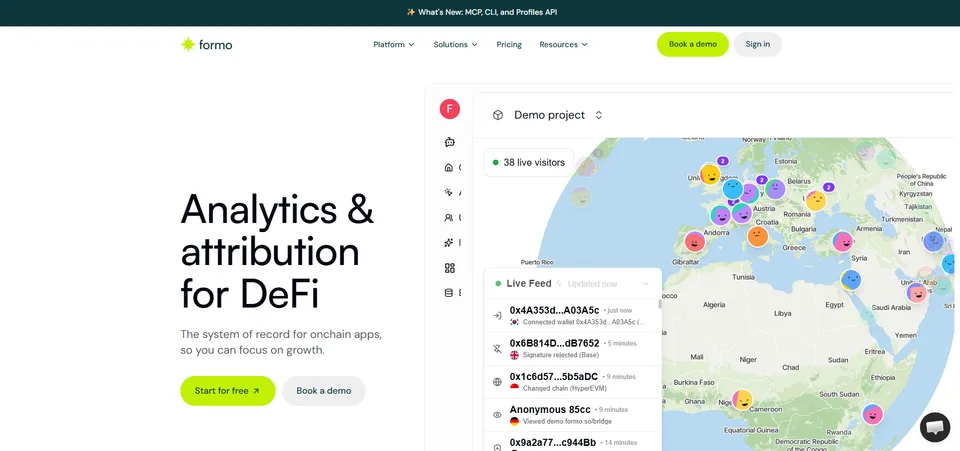
It is an analytics, attribution and wallet-intelligence platform designed to help crypto and DeFi teams understand what users do before, during and after interacting with an application.
Formo remains active in 2026, with a current product site, pricing, documentation, integrations and recent 2026 content.
Why is Formo on a community-growth list?
Because acquisition without measurement is incomplete.
Imagine a campaign generates:
50,000 participants
The important questions are:
How many connected wallets?
How many became active users?
How many transacted?
Which source produced the best users?
Which users returned?
Which users churned?
Which campaign generated the highest-value users?
Formo is designed to help answer those questions.
What is Formo?
Formo describes itself as a data platform for on-chain applications.
Its current product combines:
Product analytics
Web analytics
On-chain attribution
Wallet intelligence
User segmentation
Funnels
Retention analysis
Token-gated forms
Contract events
Wallet profiles
Current pricing
Formo currently publishes:
Growth
$159/month billed annually
Includes up to:
5,000 MAUs
Web Analytics
Product Analytics
Wallet Intelligence
Token-Gated Forms
Scale
$399/month billed annually
Includes additional capabilities such as:
Up to 10,000 MAUs
MCP & API
Ask AI
Wallet imports
Contract events
Enterprise
Custom pricing.
Key features
Wallet intelligence
Product analytics
On-chain attribution
Funnels
Retention analysis
Wallet segmentation
Contract event tracking
Token-gated forms
Cross-chain user analysis
Marketing attribution
Formo's current materials specifically describe tracking journeys from website activity and wallet connections through transactions and longer-term protocol engagement.
Best for
Formo is especially useful for:
DeFi protocols
DApps
Web3 startups
Growth teams
Product teams
Projects spending money on acquisition
Projects trying to improve retention
Strengths
1. Wallet-level intelligence
Traditional analytics often stop at browser sessions.
Formo connects web behavior with wallet and on-chain activity.
2. Attribution
Projects can investigate which channels and campaigns are actually producing users.
3. Retention
Formo's current product includes lifecycle and churn analysis designed around on-chain users.
Limitations
It does not acquire a community for you.
Technical integration may be required.
Analytics become much more valuable once a project has meaningful activity.
What to watch out for
Do not buy analytics software expecting it to solve a weak acquisition strategy.
If nobody is using your product, better dashboards will not create users.
Bottom line
Choose Formo when you have users and need to understand where they came from, what they do and whether they come back.
7. Aquads — Best for Post-Launch Crypto Project Operations
Direct answer
Aquads is a Web3 project and talent platform built around the operational needs that arise after a crypto project launches.
Rather than competing directly with quest platforms on raw audience size, Aquads focuses on bringing together several post-launch functions including project visibility, community promotion, Web3 talent, creative support and related services.
Aquads is currently active, with its website publishing current 2026 material around token listings, project promotion and Web3 growth.
What is Aquads?
Aquads is designed around a problem that smaller crypto teams frequently face:
Too many separate tools and vendors.
A live project may need:
Token visibility
Community promotion
Social campaigns
Designers
Developers
Marketers
Moderators
Creative assets
Payment infrastructure
Instead of treating each requirement as a completely separate workflow, Aquads combines several of these functions within a Web3-focused ecosystem.
Key features
Depending on the product and service:
Crypto project listings
Token visibility
Community promotion
Raid infrastructure
Telegram tools
Web3 freelancer marketplace
On-chain freelancer credentials
AI creative tools
Project discovery
Cross-chain payment functionality
Growth services
Best for
Aquads is particularly relevant to:
Newly launched crypto projects
Small Web3 teams
Mid-sized token projects
Memecoin teams
Web3 startups
Projects without large internal marketing departments
Why post-launch matters
The launch itself is often the easiest part.
The difficult part is maintaining momentum.
After launch, a project still needs to:
Maintain visibility
Produce content
Keep community activity moving
Find contributors
Work with designers
Find developers
Coordinate promotion
Pay contributors
Continue attracting users
This is where the post-launch operating layer becomes important.
Strengths
1. Post-launch focus
Aquads is specifically positioned around the needs of live projects rather than solely pre-launch quest campaigns.
2. Reduced tool fragmentation
Projects can access visibility, promotion, talent and other services through one Web3-oriented ecosystem.
3. Web3-native talent
The freelancer marketplace focuses on people providing services to blockchain projects.
4. Broad project workflow
The platform is intended to help projects continue operating and growing after the initial launch.
Limitations
Aquads should not be presented as the best tool for every growth problem.
A large Layer 1 ecosystem may prefer Galxe for a major acquisition campaign.
A project focused on token-gated membership may prefer Guild.
A protocol that needs deep wallet analytics may prefer Formo.
A project focused on on-chain activations may prefer Layer3.
Aquads' differentiator is post-launch operational integration.
Pricing
Aquads has free and paid products and services depending on the feature and usage.
Because pricing varies across the platform, projects should check the current Aquads pricing page before budgeting.
Bottom line
Choose Aquads when your project is already live and you need to coordinate visibility, community promotion, talent, creative work and other post-launch growth functions.
The Comparison
Platform | Primary Function | Best For | Current Status | Main Strength |
|---|---|---|---|---|
Galxe | Campaigns & distribution | Large-scale acquisition | 🟢 Active | Reach |
Zealy | Quests & gamification | Community engagement | 🟢 Active | Recurring participation |
Guild.xyz | Gating & membership | Token communities | 🟢 Active | Access control |
Layer3 | On-chain activations | Product usage | 🟢 Active | On-chain engagement |
TaskOn | Campaigns & quests | Flexible Web3 campaigns | 🟢 Active | Campaign versatility |
Formo | Analytics & attribution | Retention & measurement | 🟢 Active | Wallet intelligence |
Aquads | Post-launch operations | Live crypto projects | 🟢 Active | Operational integration |
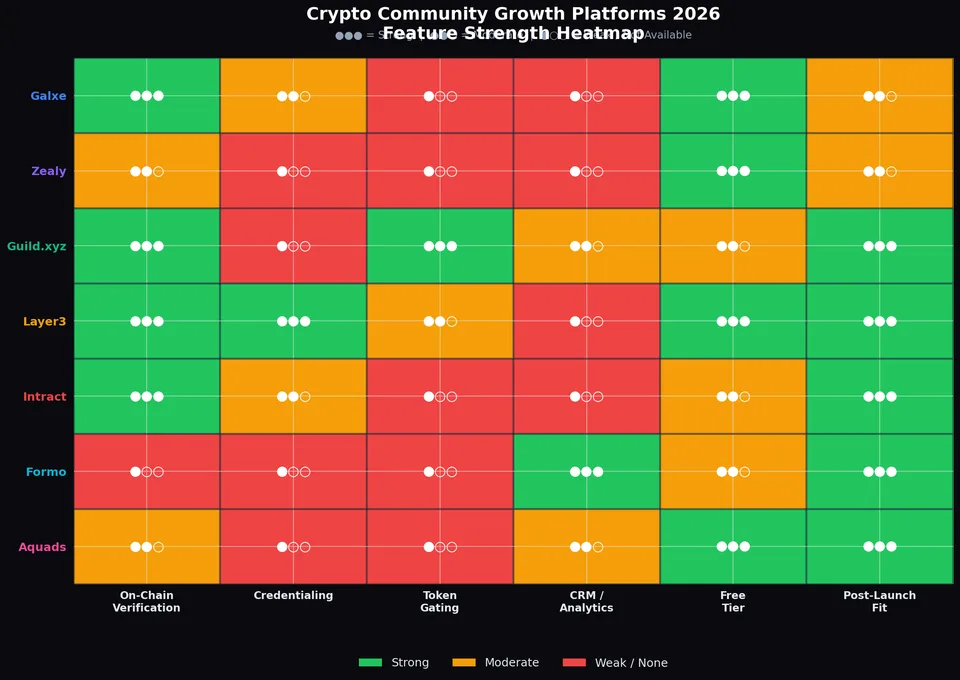
Which Platform Is Best for Each Stage?
Pre-Launch
Primary objective: Awareness
Consider:
Galxe + Zealy
Galxe can help with broad campaign distribution while Zealy can provide recurring community activities.
Launch Period
Primary objective: Activation
Consider:
Galxe + TaskOn + Layer3
Use campaign infrastructure to attract users, then design meaningful activities around actual product usage.
30–90 Days After Launch
Primary objective: Retention
Consider:
Formo + Zealy + Aquads
Formo can help measure user behavior.
Zealy can provide recurring engagement.
Aquads can support broader post-launch operations and promotion.
90+ Days
Primary objective: Scale
At this point, the stack should be based on actual bottlenecks.
You might use:
Galxe for acquisition
Layer3 for on-chain engagement
Guild for membership
Formo for analytics
Aquads for post-launch operations
Not every project needs all five.
The Most Important Difference: Acquisition vs Retention
One of the easiest mistakes to make is treating every Web3 growth platform as though it performs the same job.
It doesn't.
Galxe
“How do we reach more people?”
Zealy
“How do we keep our community participating?”
Guild
“Who should have access?”
Layer3
“How do we get users to perform meaningful on-chain actions?”
TaskOn
“How do we build flexible campaigns around acquisition, engagement and rewards?”
Formo
“What did those users actually do?”
Aquads
“How do we keep the project operating and growing after launch?”
That distinction is more useful than simply asking which platform is “best.”
How to Reduce Low-Quality Quest Farming
No platform can guarantee that every campaign participant is a genuine long-term user.
Projects can, however, make low-quality farming harder.
1. Reward meaningful behavior
A follow or retweet is easy to automate.
A genuine product interaction is harder.
2. Use wallet requirements
Token ownership, NFT ownership and previous activity can provide additional signals.
3. Combine multiple requirements
Instead of:
Follow X
use:
Follow X + complete an on-chain action + meet an eligibility condition.
4. Avoid excessive rewards
Huge rewards attract farmers.
Sometimes smaller rewards combined with meaningful participation produce better users.
5. Measure retention
A user who completes one quest is not necessarily valuable.
A user who returns 30 days later may be.
This is where analytics platforms such as Formo become particularly useful.
Do You Actually Need Multiple Platforms?
Not necessarily.
This is one of the biggest mistakes crypto projects make.
They see seven tools and assume they need seven subscriptions.
You don't.
Start with the problem.
If you need users:
Start with an acquisition platform.
If you need engagement:
Add gamification.
If you need access control:
Add token gating.
If you need on-chain behavior:
Add an activation platform.
If you need analytics:
Add measurement.
If you need post-launch operations:
Add the services and infrastructure that keep the project moving.
The goal isn't to build the biggest stack.
The goal is to build the smallest stack that solves your current bottleneck.
Galxe vs Zealy vs TaskOn
These three platforms overlap significantly.
But their positioning is different enough to make the comparison useful.
Choose Galxe when:
You prioritize large-scale reach and ecosystem campaigns.
Choose Zealy when:
You prioritize recurring gamification and community participation.
Choose TaskOn when:
You want flexible campaign infrastructure combining on-chain and off-chain tasks, eligibility and rewards.
None of them needs to be declared the universal winner.
The right choice depends on the campaign.
Guild vs Quest Platforms
Guild solves a somewhat different problem.
Quest platforms generally ask:
How do we get users to participate?
Guild asks:
Who qualifies for access?
That makes Guild particularly useful for:
Private communities
Holder groups
DAO roles
Contributor programs
NFT communities
A project could use a quest platform for acquisition and Guild for the resulting membership structure.
Formo vs Quest Platforms
Formo sits further down the funnel.
A quest platform can help generate activity.
Formo helps determine whether that activity translated into something meaningful.
For example:
Campaign → Wallet connection → Product action → Repeat visit → Retention
That makes analytics especially valuable once a project begins spending meaningful money on growth.
What Is a Post-Launch Growth Stack?
A post-launch growth stack is the collection of tools and services a crypto project uses after its token or product is already live.
It can include:
Visibility
Getting the project discovered.
Community
Keeping people engaged.
Talent
Finding developers, designers, marketers and other contributors.
Creative
Producing content and promotional assets.
Analytics
Understanding what actually works.
Payments
Paying contributors and service providers.
Promotion
Maintaining attention after the initial launch spike.
This is where Aquads has a different positioning from traditional quest platforms.
The objective isn't to claim that Aquads replaces Galxe, Guild, Layer3 or Formo.
It is to solve a different operational problem:
How does a live crypto project keep the growth machine running?
Frequently Asked Questions
What is the best crypto community growth platform in 2026?
There is no universal winner.
Galxe is a strong choice for large-scale campaign distribution.
Zealy is strong for gamified engagement.
Guild.xyz is strong for token-gated communities.
Layer3 is strong for on-chain activations.
TaskOn is strong for flexible Web3 campaigns.
Formo is strong for analytics and retention.
Aquads is particularly relevant for post-launch project operations.
What is the best free crypto community growth platform?
Several platforms offer free options or free entry points.
The right one depends on your objective.
For quests and distribution, evaluate Galxe, Zealy and TaskOn.
For analytics, Formo offers a free starting point alongside paid plans.
For post-launch services, Aquads also offers free and paid functionality depending on the product.
What is the difference between Galxe and Zealy?
The simplest distinction is:
Galxe = large-scale distribution and campaign infrastructure.
Zealy = recurring gamification and community engagement.
There is overlap, but their strongest use cases differ.
What is the difference between Galxe and Layer3?
Galxe is particularly strong for broad campaign distribution.
Layer3 places more emphasis on on-chain activity and the wider consumer on-chain experience.
Choose based on whether your priority is:
Reach
or
meaningful on-chain usage.
What is the best platform for token gating?
Guild.xyz is one of the stronger options for projects that need wallet-based membership and access control.
It is particularly useful for DAOs, NFT communities, holder groups and contributor programs.
How do I reduce bots in crypto campaigns?
No platform can eliminate bots completely.
Use multiple signals:
Wallet history
Token ownership
NFT ownership
On-chain actions
Credentials
Eligibility rules
Activity requirements
Reward limits
The more meaningful the required action, the harder it becomes to farm at scale.
Is TaskOn still active in 2026?
Yes.
TaskOn's official site, documentation and blog remain accessible, and its current public materials describe campaign, reward, eligibility and growth functionality. Its official blog also contains product and case-study material from late 2025.
However, some of TaskOn's publicly displayed user statistics are older, so those numbers should not be presented as current 2026 statistics without a newer source.
Is Layer3 still active in 2026?
Yes.
Layer3's current website is live and actively promotes its wallet, on-chain activities, trading, staking and earning products. It has also expanded beyond its original EVM focus to Solana.
Is Formo still active in 2026?
Yes.
Formo's current website, pricing page, documentation and 2026 blog are active. Its current product focuses on analytics, attribution, wallet intelligence, retention and token-gated forms for on-chain applications.
Is Zealy still active in 2026?
Yes.
Zealy's current platform remains operational, with live communities, quests, rewards, documentation, blog content and a current changelog.
Is Galxe still active in 2026?
Yes.
Galxe's current website and product ecosystem remain active, including Quest, Passport, Score, Starboard, Earndrop and other products. Galxe also published its 2025 Year in Review and continued publishing product updates in 2026.
Is Intract still active?
Intract Quest is not an active platform to include in a 2026 growth-platform comparison.
The former Intract Quest product has announced that it is sunsetting.
For that reason, it has been excluded from this guide.
This is an important distinction because older “best Web3 quest platform” articles may still contain platforms that are no longer operating.
Should I use one growth platform or several?
Start with one.
Identify your biggest bottleneck.
If you need acquisition, solve acquisition.
If you need engagement, solve engagement.
If you need analytics, solve analytics.
If you need post-launch operational support, solve that.
Only add another platform when your next bottleneck justifies it.
Final Verdict
The crypto community-growth market in 2026 is no longer simply about collecting followers.
The strongest projects increasingly think in terms of a complete user journey:
Acquire → Activate → Engage → Verify → Retain → Measure → Scale
Different platforms own different parts of that journey.
Galxe
Best suited to large-scale campaign distribution.
Zealy
Best suited to gamified community engagement.
Guild.xyz
Best suited to token-gated access and membership management.
Layer3
Best suited to meaningful on-chain activations.
TaskOn
Best suited to flexible Web3 campaign and reward infrastructure.
Formo
Best suited to analytics, attribution and retention.
Aquads
Best suited to post-launch project operations and growth services.
There is no reason a serious project cannot use more than one.
But don't build a complicated stack just because the tools exist.
Start with the problem.
If you're pre-launch, you may need awareness.
If you're launching, you may need activation.
If you're 30 days post-launch, you may need retention.
If you're scaling, you may need analytics.
And if you're already live and struggling to coordinate visibility, promotion, talent, creative work and other growth functions, you may need a post-launch operating layer.
The best Web3 growth stack is not the one with the most tools.
It is the one that solves the right problem at the right stage.
Sources & References
The sources below were reviewed as part of the research and fact-checking process for this article. Primary sources are preferred for current platform functionality, product information, pricing, and company-reported statistics. Third-party sources are used where they provide additional market, traffic, or token data.
Research and verification date: August 8, 2026
Galxe
Primary source for Galxe's reported 2025 platform statistics, including users, partner projects, daily active users, quest activity, zkRaffles, ecosystem activations, and product developments. Published January 13, 2026.
Zealy
Primary source for current platform availability, quests, rewards, community discovery, and creator functionality.
Zealy — Official Community Blog
Primary source for Zealy product updates, case studies, campaigns, and platform developments.
Semrush — Zealy Website Traffic Overview
Third-party estimated website traffic and engagement data. The current Semrush report available during research contains May 2026 traffic data. Traffic figures are estimates and should not be interpreted as audited visitor counts.
Guild.xyz
Primary source for current Guild functionality, including community management, membership requirements, token/NFT gating, quests, roles, and integrations.
Semrush — Guild.xyz Website Traffic Overview
Third-party estimated website traffic and engagement data. The current Semrush report available during research contains May 2026 traffic data. Traffic figures are estimates and should not be interpreted as audited visitor counts.
Layer3
Primary source for current Layer3 products, on-chain activities, wallet functionality, trading, staking, rewards, and ecosystem information.
Third-party market and token information for the L3 token.
Third-party market, token, supply, trading, and historical price information.
TaskOn
Primary source for current TaskOn platform availability and positioning.
TaskOn — Official Documentation
Primary source for TaskOn campaign functionality, quests, rewards, eligibility, verification, on-chain/off-chain tasks, and platform features.
Primary source for TaskOn's campaign functionality, supported task types, verification mechanisms, rewards, campaign creation, and historical platform information.
Important data note: Some statistics contained in TaskOn's public documentation are historical. They should not be interpreted as independently verified August 2026 user numbers unless a newer source confirms them.
Formo
Primary source for current Formo analytics, attribution, wallet intelligence, user analytics, retention, and on-chain growth functionality.
Primary source for current analytics capabilities, funnels, cohorts, on-chain attribution, user journeys, retention analysis, and growth measurement.
Primary source for current Formo pricing, plan limits, and available product tiers.
Primary source for current product announcements, analytics guidance, attribution research, and 2026 product updates.
Aquads
Primary source for current Aquads platform functionality, project promotion, Web3 services, freelancer marketplace, community-growth tools, and other platform products.
Primary source supporting current information regarding Aquads Project Hub, Bubble Ads, paid promotion, freelancer services, affiliate program, and platform operations.
Note: The previously listed Aquads /pricing URL was not reliably accessible during this verification pass. It has therefore been excluded rather than publishing a potentially broken pricing reference. Current pricing should be checked directly on the live Aquads platform before publication.
Intract — Historical Verification
Intract Quest — Sunset Announcement
Primary source confirming that Intract Quest is sunsetting and closing its doors. This source is included specifically to document why Intract was excluded from this 2026 comparison.
The sunset page states that Intract Quest is closing and reports historical figures of 5,000+ partnerships, 12M+ questers, and $10M+ rewards earned. These figures should be treated as historical platform-reported figures and are not evidence that the service remains active.
Source Methodology
This article prioritizes current primary sources whenever possible.
For platform functionality, the official platform or documentation was used.
For traffic estimates, Semrush was used where current public domain-level data was available.
For token-market information, CoinMarketCap and CoinGecko were used.
For historical platform statistics, the original company or platform documentation was preferred where available.
Important distinction between current and historical data
Web3 platforms change rapidly. A statistic published in 2023, 2024, or 2025 should not automatically be interpreted as a current 2026 statistic.
Where older figures are included, they are identified as historical or company-reported figures rather than presented as independently verified current metrics.
Traffic figures from Semrush are estimates and should not be interpreted as audited visitor numbers.
Company-reported user, transaction, partnership, campaign, or reward figures are likewise presented as reported figures unless an independent source verifies them.
Platform-status verification
The platforms included in this comparison were checked for current operational evidence during the August 8, 2026 research pass.
Platforms whose relevant products had been discontinued or sunset were excluded from the ranking.
This is particularly important in Web3, where older comparison articles can continue ranking in search results long after a product has changed, shut down, or moved to a different business model.
Research and platform-status verification: August 8, 2026.